
Welcome to SATIIMSATIIM hosts exchange with Q’eqchi Mayan leaders from Guatemala
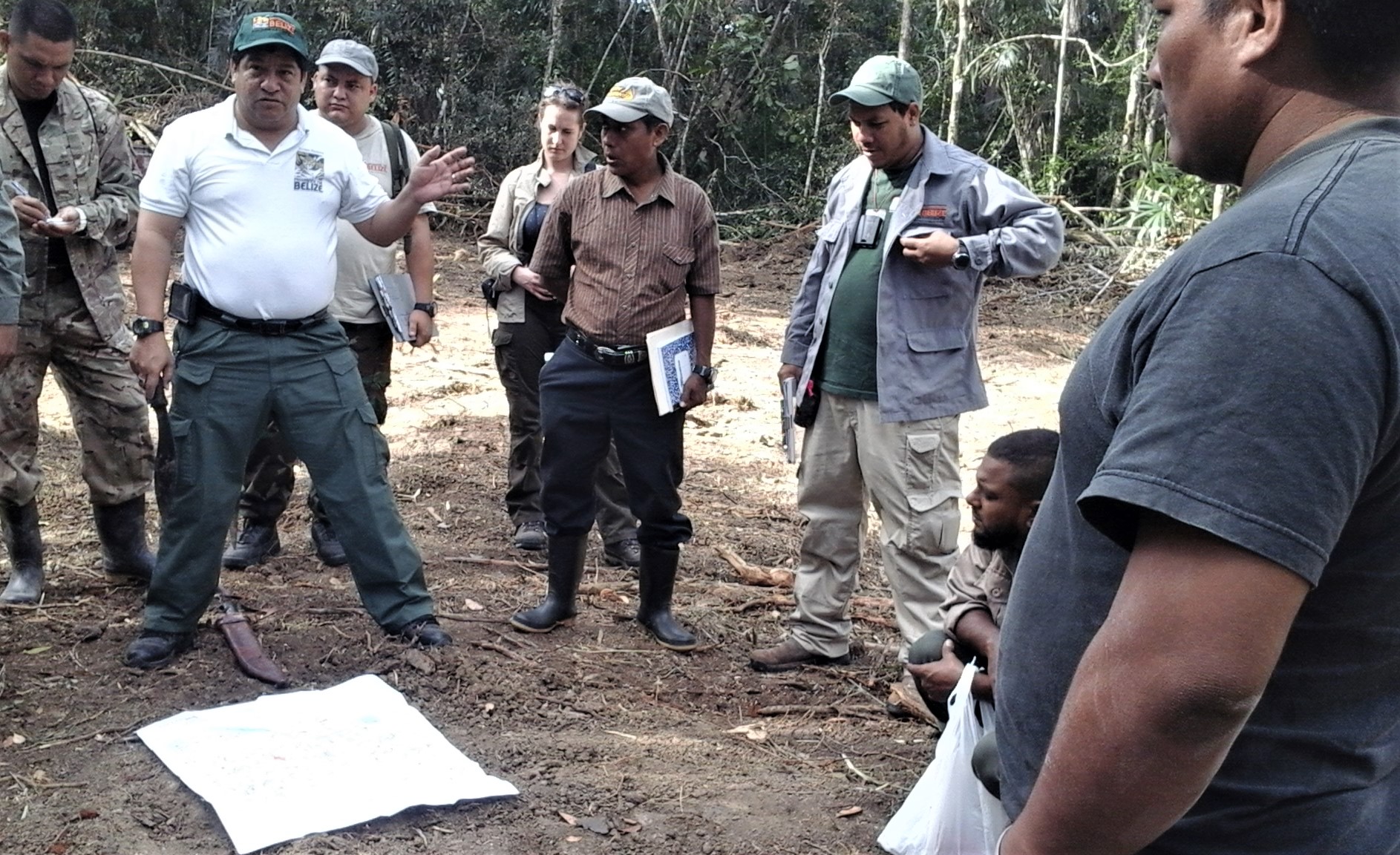
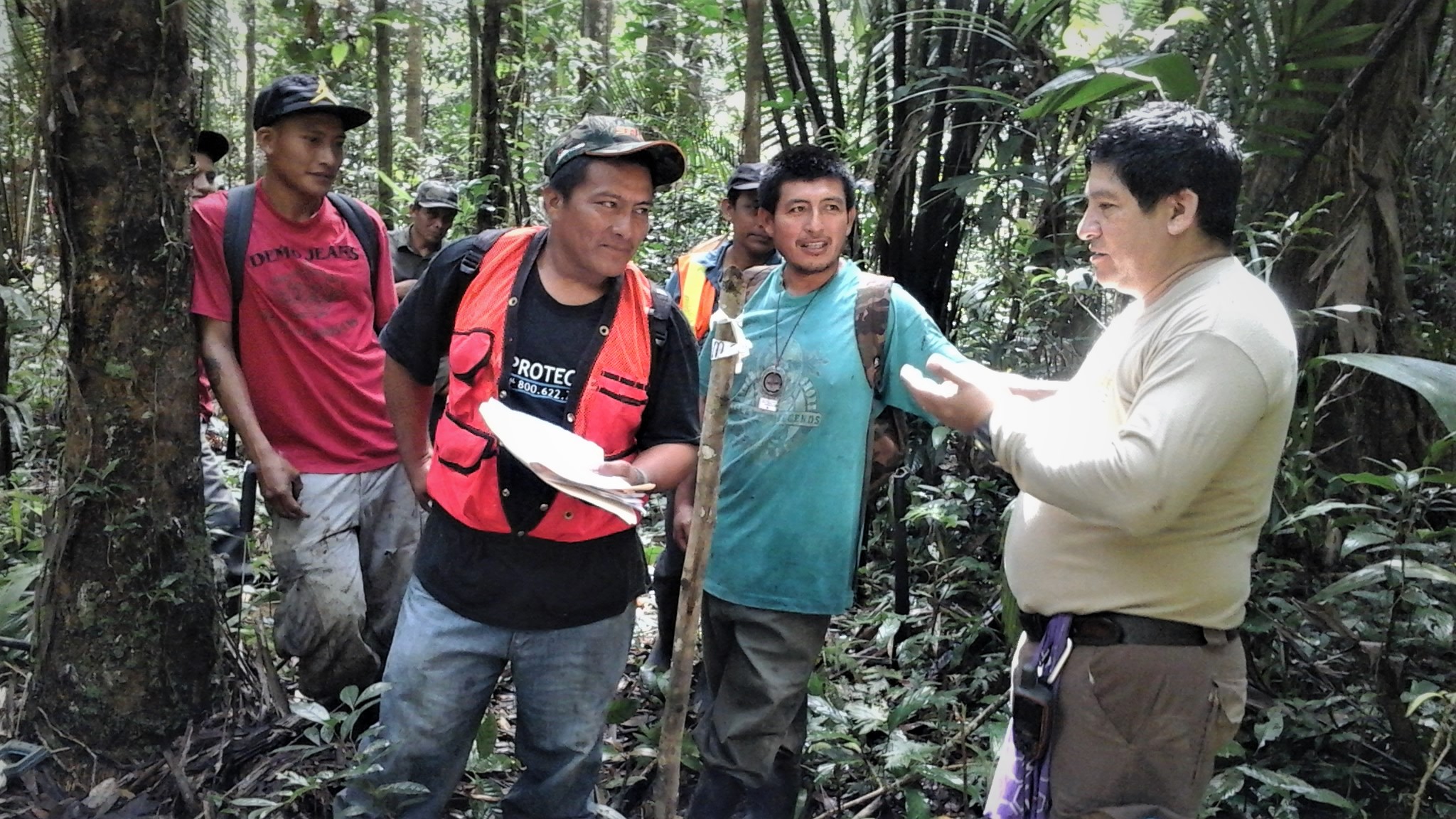
On Wednesday 14 December SATIIM welcomed 12 Mayan community leaders from El Estor, Izbal, Guatemala to Toledo, Belize, to exchange ideas and experiences and develop strategies to fight erosion of their rights by oil companies, palm oil estates, nickel mines and protected areas.
Delegates from Guatemala were first introduced to the role of SATIIM in co-managing the Sarstoon-Temash National Park, as well as furthering indigenous self-reliance through gaining title to their lands and managing their forests sustainably. In the evening the visitors presented themselves to the Mayans of Toledo through participating in a discussion on Ak’ Kutan radio at Tumulkin in Blue Creek, giving their thoughts on the work of SATIIM, the situation of indigenous peoples in Guatemala, and how people on either side of the border can learn from each other. The intrusion by ranchers, US Capital Energy, Nickel mines, palm oil plantations and protected areas on Q’eqchi’ land in Guatemala was described, and the delegates urged Belizean Maya to learn from this and achieve legal title over their lands. Manuel Xó Cú, Coordinator of the Legal Department of the Defensoría Q’eqchi’ said that Guatemalan Mayans needed to fulfil three things to secure their future: “First, stop being afraid; second, stop being ashamed; and third, start to dream.”
On Thursday a meeting was held in Midway village between local indigenous (Garifuna and Mayan) leaders and the Guatemalan delegates, in which Mr. Manuel Caal, former Chairman of Conejo during the 2007 Maya land rights case, described the process by which Conejo and Santa Cruz won the title to their land in the Supreme Court of Belize. In the face of the leasing and selling of their lands and the indifference of government bureaucracy, Caal recalled how Midway resident Federico Sam “started to think that we needed to resolve our boundaries, and he brought us together – six or seven villages right in this area – at that time I was there to share my thoughts as a leader of the village. He said we are all poor and marginalized, and our land is being surveyed and sold and leased by people who are outside of the village. There were also some problems among ourselves and we felt that in order to move forward we needed to resolve those boundary problems so that everyone knew where each boundary was, so that Midway has its piece of land, Conejo has its own, and Sundaywood have theirs. It was a long process and there were people who didn’t fully understand, but we put a line around our land and with the help of the organization that we helped form, SATIIM, we created a map showing the land of each village.”
He described how the village leaders then presented their work to the government in Belmopan but received no response, so the community leaders then focused on consulting their communities and educating themselves about their entitlements. “We started to learn that we had rights, and how we could take our ideas for resolving the problems of our villages to the Supreme Court.” The delegates learned how those rights were recognized in the 2007 Supreme Court decision, and Caal concluded, “we saw how the law was there to protect our rights.”
Guatemalan delegates presented the situation of women in indigenous communities in Guatemala, the mistakes their parents had made in accepting the dispossession of their ancestral lands, and the importance of developing community cohesion and mobilization. Then Macario Che, leader of ten villages around Sarstoon Creek in Guatemala, described how his community confronted US Capital Energy over its activities when the oil company was making seismic lines in Guatemala in 2009. “I had a meeting with leaders of the ten villages and together we agreed to ask the oil company to show us where the line was going to be cut. They told us, and much of it was going to be close to our village so we had another meeting with the leaders who told me that we should demand that they pay us. So we proposed to Martin Choco that if they want to make the trails they will pay to the village $50,000. And that was when Martin Choco said the company was unlikely to pay as in Belize the villagers accept everything and they don't need to pay, and that if they can't get it out of Guatemala they will get it out of Belize.”
Gregory Cho'c, Chief Executive of SATIIM, later warned that US Capital Energy was not bringing genuine employment to the communities around the Sarstoon Temash National Park, but short-term jobs. He said: "What we in Belize should be asking all those seeking to use local resources is not 'What types of jobs will we get?' but 'What kind of employment will we get?' The job will last two weeks, then it will end. Now if you get employment then you're employed as the law provides until you're 65, you get your benefits. There are riches in our country and in our backyard, but how do we make sure that we benefit from those riches? Because for so long people have come and taken them out and we've got nothing. SATIIM's position is that there should be no drilling because we don't think that the rule of law has been respected, we don't think there is environmental justice because of the nature of the seismic testing in the park, and we don't think there has been respect for the rights of indigenous communities. Also, perhaps most importantly, there is no provision for economic equality. There is a continuation of an economic system that extends the gap between the haves and the have-nots; the government is continuing with the norm."
Seismic trails used for poaching
Since the seismic trails have been opened up, remnants (trunks and pieces of timber) of illegal logging and hunting activities were observed, and the poachers have cut smaller trails from the seismic lines to areas further into the park. SATIIM rangers and BDF personnel departed Punta Gorda on November 15, 2011, for a 4 day monitoring mission of the STNP. On this trip they encountered US Capital Energy operations in full rig: seismic lines cut, workers drilling, boats travelling up and down the river transporting workers, etc. The seismic lines, which originate from the banks of the Sarstoon River, cut right across the park. One of the first lines cut on the Temash River has been flagged with tapes and the mangroves have been cut clean about 10 feet from the river’s edge. Other seismic lines were flagged and cut straight to the river’s edge leaving no buffer. Gangs of illegal loggers are informed of SATIIM patrols via radio and are then able to use seismic lines to reach the river and escape to Guatemala by boat without being apprehended. SATIIM has called on the Belizean government to make US Capital Energy cover the cost for SATIIM to monitor and patrol the seismic lines which cut across the park, coming from the international border and providing open access to poachers and illegal hunters and loggers. This will help to ensure that these seismic lines will in fact not become highways for the Guatemalans to come and extract our precious resources inside the park. Due to the clear evidence of poaching, SATIIM is requesting that seismic testing activities are suspended until it is agreed how the impacts would be mitigated. SATIIM also suggests that an environmental assessment of seismic testing in the STNP should be conducted to identify potential impacts and recommend mitigation measures prior to the continuation of seismic testing. Illegal logging in the STNP discovered by the SATIIM/BDF patrol Seismic trail making an escape route in the park US Capital Energy drilling a seismic line in the park
Seismic trails cut to the river's edge create easy escape routes for Guatemalan poachers
Immediate Press Release
November 9, 2011
SATIIM feels it’s extremely important to respond to unfounded and baseless claims made by well-paid public servant, Mr. Andre Cho, Director of Geology and Petroleum. When a public servant comes outright and lies to the Belizean public, it does not only question the professionalism with which that officer conducts his duties on behalf of the Belizean people, but he also does a disservice and injustice to the Belizean public.
The facts are as follow:
1) Petroleum and Geology and Forest Department, despite numerous letters to them, have not given us any information on US Capital Energy activities currently ongoing in the Sarstoon Temash Region. We have enclosed all correspondence between SATIIM and the two government departments.
2) At the village leaders meeting that we held at the Parish Hall on Monday November 7th, 2011, all alcaldes and village council chairpersons stated categorically that they DO NOT know what US Capital Energy is doing in the area. Neither the Forest Department or Geology and Petroleum Department have informed them of what kind of permit has been issued to US Capital Energy. SATIIM has a two and half hour video of the discontent that leaders expressed at the meeting and is willing to submit it to the media.
SATIIM urgently requests that Mr. Andre Cho and the Geology and Petroleum Department discloses to the general public, the agreement or consent that his department and US Capital Energy has reached with the landowners of the area, since community leaders have emphatically said they have none and they have not seen Mr. Cho in their village. We assume that any agreement or consent would be in writing.
We also demand that the Forest Department discloses to the general public, all fax reports, which will show that they have indeed faxed the pertinent information to SATIIM. We received a call from the Forest Department this morning informing us that they faxed a few letters to us. The only fax we received was from Mrs. Beverly Castillo on November 1st, 2011, who informed SATIIM’s Executive Director, Mr. Gregory Ch’oc, that the Deputy Prime Minister was unable to meet before November 1, 2011.
Finally, we at SATIIM urge the Forest department and the Geology and Petroleum Department to act with honesty and transparency when dealing with issues concerning the Belizean people. We view their roles as fundamental to ensure fairness in the development process of this country. Any deviation from this will only deepen inequality, discrimination, marginalization and poverty in our Belize.
“End the Secrecy!” – SATIIM Demands Explanation for US Oil Company’s Return to National Protected Land *Government ignores local communities requests for information *Defies historic Supreme Court ruling based on country’s constitution and the United Nations Declaration on the Rights of Indigenous Peoples. The Sarstoon Temash Institute for Indigenous Management (SATIIM) calls all those who care about Belize’s biocultural diversity demand that the government explain what an oil company is doing on protected land. On October 25 SATIIM learned that the American oil company, US Capital Energy had suddenly re-appeared on protected and Maya land -- without prior notice or consent of the communities. According to reports, the oil company has been operating for over a week inside the Sarstoon Temash National Park (STNP) in Southern Belize. While the park is officially co-managed with the surrounding Q’eqchi Mayan and Garifuna villages, the government never informed SATIIM that a permit had been issued. The company is wasting no time -- a truck equipped for seismic drilling has already arrived along with a drill-ready tractor. Trees were cut for two seismic lines in Sunday Wood village, with rumors of plans to cut more in the village of Crique Sarco. This is merely the latest ‘surprise’ in a shameful history of secrecy that began one morning in 1997. Five Indigenous communities in Southern Belize woke up to learn that the government had declared their ancestral land a national park in 1994. Ever since, these communities have struggled to defend their land at every turn. Notably, in 2006 they won a temporary injunction against seismic testing in this protected area, where an entirely new ecosystem was recently discovered. Another ruling from the Supreme Court confirmed Maya rights to land and resources and Belize’s obligation to conform to international standards of informed consent established when it signed the UN Declaration on the Rights of Indigenous Peoples (UNDRIP) in 2007. Nonetheless, the government has kept all dealings with US Capital Energy secret. SATIIM asked for information in several letters to the Prime Minister, Deputy Prime Minister and Chief Forest Officer. The government has ignored each one. When SATIIM met with Indigenous leaders Monday 7 November, all villagers expressed outrage and growing concerns that the government and the company did not inform them about the seismic activities. SATIIM demands that the government respect: 1) the rule of law; 2) environmental justice; 3) economic equality; and 4) its obligations under UNDRIP and legal rulings by Belize’s highest courts. Most of all, SATIIM demands the government end the secrecy around US Capital Energy’s new operations in Southern Belize. SATIIM and the Indigenous communities have agreed to use any means necessary to bring the government and company in compliance with national and international law. We are calling upon the Belize government to withdraw its appeal of the Supreme Court's ruling on June 28, 2010 that reaffirmed the Constitutional Land Rights of the Maya People. SATIIM has a new blog! SATIIM and the Advocacy Project have a new partner page ( with a donate button!) SATIIM in the news -- "The government has been engaged in a vicious campaign to discredit and choke SATIIM’s funding – the lifeline of SATIIM’s existence,” Greg Ch’oc tells World Bank Read More...
|